
Steering through the choppy waters of taxation can be as demanding as guiding through a storm for yacht crew and seafarers. The complexities of determining tax obligations hinge on factors like residency status and the location where income is earned. Particularly intriguing is the Seafarers Earnings Deduction (SED), which offers a potential tax exemption for those qualifying under its stringent conditions. Understanding these nuances not only guarantees compliance but also optimizes financial outcomes, leaving one to ponder what other tax intricacies might lurk beneath the surface.
Does the Yacht Crew Need to Pay Tax?
The question of whether yacht crew needs to pay tax hinges on a few distinct factors unique to their employment situation.
It is essential to understand the specific tax obligations that apply to seafarers, which vary considerably from those of land-based employees.
Additionally, failing to comply with these tax requirements can lead to severe financial and legal consequences.
Understanding Seafarer’s Tax Obligations
While many assume that working at sea might exempt individuals from paying taxes yacht crew members are often required to fulfill tax obligations based on their residency and where in the world they earn their income.
Steering through seafarer’s tax involves understanding various regulations, including the potential for tax relief if specific conditions are met.
- Seafarers’ Earnings Deduction: This can provide tax exemption for qualifying periods at sea.
- Complete Your Tax Return: Yacht crew must report their income to HMRC, often requiring detailed travel logs.
- Tax Obligations: Depend on residency status and the laws of the country tied to the income.
- Qualifying Period: Essential for claiming deductions, typically defined as a minimum time spent working on a vessel outside home country waters.
How Yacht Crew Tax Differs from Others
Understanding seafarers’ tax obligations highlights unique challenges faced by yacht crew members, who must traverse distinct tax landscapes compared to other professions.
Unlike typical employees, do yacht crew pay tax under specific maritime industry conditions. In the UK, crew members may benefit from the Seafarers’ Earnings Deduction (SED), which allows them to greatly reduce their taxable income if they qualify for SED by meeting certain criteria such as working on a ship and spending a requisite number of days outside the UK.
This seafarers’ tax advantage necessitates that UK crew meticulously track their travel to confirm eligibility. In addition, yacht crew must often complete a tax return to accurately report their earnings and claim any deductions, maneuvering the complexities of seafarer’s tax law.
Consequences for Not Paying Taxes
Many yacht crew members often question whether they need to pay taxes at all, given their transient, contract, and international employment status.
However, failing to comply with tax obligations can lead to severe repercussions. Here are some potential consequences:
- Fines from HMRC: Non-payment can result in hefty fines and penalties.
- Legal Proceedings: Tax authorities may initiate legal action for evasion.
- Loss of Seafarers’ Earnings Deduction: Eligibility might be compromised if not compliant with tax legislation that allows for this deduction.
- Issues with UK Tax Residency: Non-compliance can affect one’s status as a UK tax resident, impacting how they are taxed on worldwide income.
What is the Seafarers Earnings Deduction (SED)?
The Seafarers Earnings Deduction (SED) provides a tax exemption for qualifying yacht crew members, potentially reducing their taxable income to zero.
Understanding eligibility criteria is vital for yacht crews aiming to benefit from this deduction. The process for claiming SED and its implications on overall income tax obligations are essential considerations for those working in maritime sectors.

Eligibility for Seafarers Earnings Deduction
What exactly is the Seafarers Earnings Deduction (SED)? It’s a notable tax relief available for yacht crew and seafarers who meet certain criteria related to their work outside UK waters.
Determining eligibility for this deduction allows many seafarers to reduce their taxable income markedly.
- Worked Outside the UK: Crew members must work on a ship and perform duties outside UK waters to qualify.
- Earning Deduction Eligibility: Primarily aimed at reducing seafarers’ tax, the individual must spend a qualifying period, typically half the tax year, outside the UK.
- Type of Vessel: The deduction covers those working on ships, excluding those primarily stationed in UK waters.
- Residency Status: The seafarer must be a UK, though there are specific rules regarding their residency status and ties to the UK.
How to Claim SED as a Yacht Crew Member
Understanding the Seafarers Earnings Deduction (SED) eligibility requirements is the first step for yacht crew members. To qualify for the deduction, which can lead to a tax-free salary, the individual must be a UK resident who works on board a ship and spends significant time outside the UK.
Detailed records of days spent in the UK and abroad are essential. When preparing to complete your seafarers’ tax return, include all income to HMRC and document eligibility for SED. The process involves specifically outlining periods spent abroad to meet the stipulated criteria.
Yacht crew should meticulously compile and submit these details within their tax returns to effectively claim the seafarers’ earnings deduction and potentially benefit their employer from significant tax savings.
Impact of SED on Income Tax
How does the Seafarers Earnings Deduction (SED) influence the income tax obligations of yacht crew members. The SED notably alters how seafarers, including yacht crew, manage their tax responsibilities in the UK. This tax legislation allows qualifying individuals to claim tax relief, potentially exempting their income from UK income tax.
- Tax Relief: SED provides substantial tax relief, reducing the taxable income of eligible seafarers.
- HMRC Compliance: Crew members must comply with specific HMRC guidelines to qualify.
- Tax Return Impact: Properly claimed, SED can notably affect the outcome of a seafarer’s tax return.
- Earning Deduction: This deduction can make a major portion of a seafarer’s income exempt from UK income tax.
How to Complete Your Tax Return as a Yacht Crew Member
Filing a tax return as a yacht crew member can be complex, but following a step-by-step guide can simplify the process.
The yacht crew needs to be aware of common mistakes that can occur when completing their tax returns to avoid potential penalties.
Detailed understanding and careful preparation are key components in accurately handling tax obligations in this unique employment sector.
Step-by-Step Guide for Yacht Crew
Maneuvering the complexities of tax returns can be intimidating for yacht crew members, who often face unique financial situations due to their employment structure and varied sources of income.
Here’s a simplified step-by-step guide:
- Gather Documentation: Collect all records of earnings, including tips and bonuses.
- Understand Eligibility for Seafarers’ Earnings Deduction: Determine if you qualify for specific deductions available to seafarers.
- Consult a Tax Specialist: Obtain professional tax advice to navigate through seafarer tax regulations and maximize financial solutions.
- File Accurately and Timely: Confirm all information is correct and submit your tax return by the deadline to avoid penalties.
Engaging a tax specialist familiar with yacht crew employment and tax advice is essential for effective handling of your tax obligations.
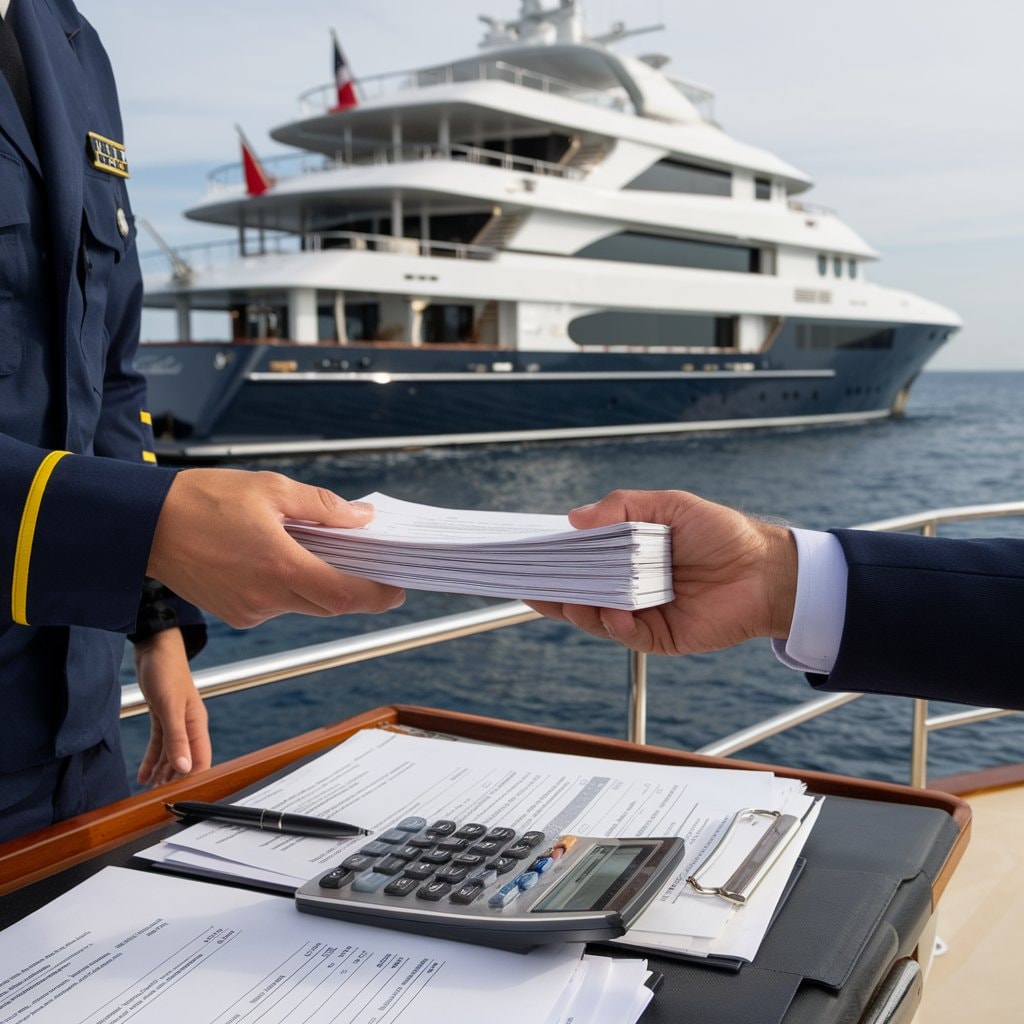
Common Mistakes to Avoid on Your Tax Return
Maneuvering through the intricacies of tax returns, yacht crew members often encounter specific pitfalls that can lead to costly errors.
When attempting to complete their tax return, it is essential for yacht crew to meticulously track and retain receipts for all allowable expenses. This documentation is imperative to claim the seafarers’ earnings deduction correctly.
A common mistake is inaccurately calculating these expenses or forgetting to include them altogether, both of which can impact the potential tax refund. Additionally, failing to accurately report all income can result in having to pay back taxes and possibly incur penalties.
Careful completion of the tax return and ensuring all income and expenses are properly reported are critical for the yacht crew to avoid these financial mishaps.
Do Superyacht Crew Have Different Tax Obligations?
Superyacht crew members often face unique tax obligations compared to their counterparts on smaller yachts.
This difference stems from varying international regulations and the complex financial arrangements typical of larger vessels.
An understanding of specific tax legislation for the superyacht crew is essential to guarantee compliance and optimize tax responsibilities.
Differences Between Yacht and Superyacht Crew Taxes
While both groups may operate under similar maritime laws, the financial implications, especially regarding taxes, can differ significantly.
For superyacht crew members, managing tax affairs can be more complex due to the higher income and additional international regulations.
- Superyacht crew often qualify for seafarers’ earnings deduction, reducing taxable income.
- Tax year considerations are essential, as superyacht itineraries can affect residency status for tax purposes.
- Different countries may offer varying levels of tax relief for seafarers, impacting superyacht crews more notably.
- Managing seafarers’ tax requires careful planning to guarantee all income is declared and any applicable deductions are correctly claimed, especially given their high pay structures.
Understanding Tax Legislation for Superyacht Crew
As established, the tax landscape for superyacht crew members involves complexities that are not as prevalent for standard yacht crews due in part to their unique employment circumstances and higher earnings.
Significantly, the tax legislation relevant to those working on a superyacht dictates that the ability to claim the seafarers’ earnings deduction depends on meeting specific criteria, such as being outside the UK long enough to qualify.
A specialized tax service for all UK crew can assist in accurately calculating the amount of tax owed. For those paid a salary while maneuvering international waters on a super yacht, understanding crew finance and seafarer’s tax is imperative to guarantee compliance and optimize financial outcomes.
What Tax Services Are Available for UK Crew?
Maneuvering the tax landscape as a UK yacht or cabin crew member demands specialized services tailored to their unique financial situations.
Selecting the right tax specialist is essential, as their expertise can greatly influence the crew’s ability to optimize tax savings.
These services not only guarantee compliance with tax laws but also provide strategies to maximize income and job retention.
Tax Services for UK Yacht & Cabin Crew
While many UK yacht and cabin crew members may face unique tax situations due to their international income and travel schedules, a variety of specialized tax services are available to assist them.
These services are designed to navigate the complex waters of tax legislation specific to seafarers and guarantee compliance with HMRC requirements.
- Guidance on Seafarers’ Earnings Deduction (SED) to maximize tax relief
- Preparation and filing of Self Assessment tax returns tailored for yacht crew
- Advice on seafarer’s tax status and residency issues affecting tax liability
- Representation in disputes with HMRC over seafarers’ tax matters
Tax service providers offer extensive support, guaranteeing that UK crew can sail smoothly through their tax return processes without facing penalties or overpayment.

Choosing a Tax Specialist for Yacht Crew
Selecting the right tax specialist is vital for yacht crew members, who require expert advice tailored to their unique financial situations.
Tax service for all UK crew should be thorough, focusing specifically on seafarers’ tax issues, such as the seafarers’ earnings deduction and tax legislation that allows foreign income exclusion.
It’s essential to choose a service provider who can run a seafarers tax service efficiently, ensuring everything is done correctly so you pay the correct amount of tax.
Proper management means securing tax relief on the amount you owe, which can greatly reduce financial burdens. Opt for a tax specialist who will take care of your tax obligations meticulously, make sure they are done properly, and safeguard your earnings and investments while complying with legal standards.
How Tax Services Can Help You Save Money
Tax services designed specifically for UK yacht crew can greatly reduce financial strain by optimizing tax deductions and exemptions available under maritime-specific tax laws.
The seafarers’ earnings deduction allowance, a cornerstone of the seafarer’s tax system, is a piece that can save you so much money when claimed properly. Confirming it is done correctly prevents the risk of having to pay a fine of £100 or more.
- Dedicated Filing Assistance: Confirms compliance with the complex maritime tax laws.
- Personalized Consultations: Tailored advice to optimize seafarers’ tax benefits.
- Audit Defense: Support and representation in case of any disputes with tax authorities.
Choosing a tax service for all UK crew guarantees peace of mind, cost, and significant financial advantages.
What Happens if You Worked Outside the UK?
When yacht crew work outside the UK, their UK tax obligations might be affected. These individuals need to understand how to correctly report their offshore earnings to HM Revenue and Customs (HMRC).
Failing to comply can lead to penalties, making accurate reporting essential for financial and legal reasons.
Impact on UK Tax Obligations
- Seafarers’ Earnings Deduction: If you worked outside the UK and took qualifying voyages, you might be eligible for the Seafarers’ Earnings Deduction, which could exempt you from UK income tax.
- HMRC Requirements: You’ll need to file a tax return with HMRC to claim any deductions and report worldwide income.
- Domicile status: Your tax liability in the UK largely depends on your residence status; non-residents may not owe tax or national insurance on foreign income.
- Documentation: Keeping detailed records of travel and work days outside of the UK is essential to prove eligibility for seafarers’ tax exemptions.
These factors determine whether you’ll have to pay UK taxes on your earnings as a seafarer.
How to Report Offshore Earnings
Reporting offshore earnings as a member of a yacht crew involves several essential steps. It’s vital to recognize and note that the seafarer’s earnings deduction is a key piece of tax legislation that can greatly affect how much tax you’ll have to pay.
When submitting information on seafarers’ earnings, the declaration should accurately reflect all income earned outside the UK. This guarantees that HMRC can then impose the correct seafarers’ tax.
Compliance is critical when it comes to tax matters; inaccurate declarations can lead to penalties. Consequently, understanding the specific requirements and benefits, such as the seafarers’ earnings deduction, helps in legally minimizing the tax burden. Always verify accurate and timely reporting of your earnings to HMRC to avoid potential issues.
Conclusion
To summarize, yacht crew and seafarers must navigate complex tax obligations based on their residency and work locations. The Seafarers Earnings Deduction offers significant relief for eligible individuals, contingent on accurate record-keeping and compliance with HMRC regulations. Superyacht crew may face distinct requirements, underscoring the importance of specialized tax services for advice and assistance. Ultimately, understanding and fulfilling these obligations guarantees legal compliance and optimizes financial and life outcomes for those working in maritime professions.


